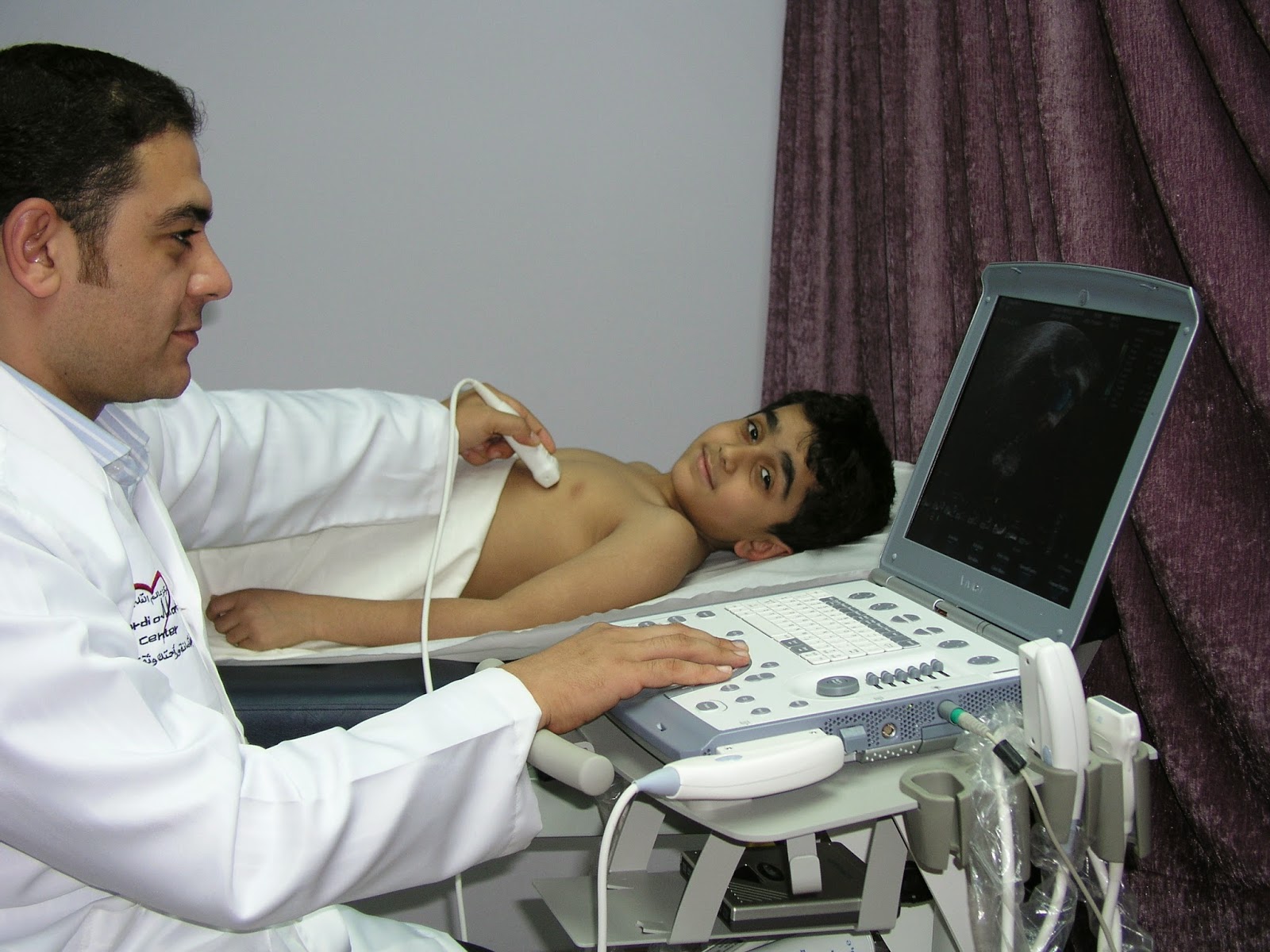
Echocardiogram
is a test that used to create the image of the heart by using sound
waves. This is used to manage and follow up the patient who have the
heart diseases. It also used to evaluate the direction of the blood
flow through heart. By using the electrodes which is placed on the
heart, the electrical activity is measured.
The
different types of echo cardiograms are :
1.Trans thoracic echo cardiogram : In this this process, places probe,
on the chest wall and bounces sound waves off the structures of the
heart. The signals are received by the probe and converted to image
with the help of a computer.
2.
Transesophageal echocardiogram : Here instead of placing the probe on
the chest wall, a cardiologist will direct the probe through the
mouth into the esophagus. The sound waves can travel to the heart
without the interference of the ribs and muscles of the chest wall.
3.Doppler echocardiogram: Using Doppler effect or technology, the
echocardiogram can assess the speed and direction of blood flow, that
can help to increase the amount and quality of information available
from the test. The computer can add color to help the doctor
appreciate that information.
4.Stress echocardiogram: The patient may be asked to exercise. The
echocardiogram is performed before exercise as a baseline and then
immediately afterwards.
The
Echocardiogram is done for :
Look for the cause of abnormal heart sounds, unexplained chest
pains, shortness of breath, or irregular heartbeats.
To check the thickness of the heart wall.
To check the heart valves that for to know how well they work.
See that how well an artificial heart valve is working.
Measure the size and shape of the heart chambers.
Check the ability of your heart chambers to pump blood.
Detect a disease that affects the heart muscle.
To check for blood clots and tumors inside the heart.
Normal
results of Echocardiogram
A
normal echocardiogram values indicates normal heart measures and
chambers and normal wall movement.
Abonormal
Results of Echocardiogram
Some
problems are very minor and do not make major risks. Other
abnormalities are signs of serious heart disease. You will need tests
by a experts in such cases.
Risks
with Echocardiogram
Usually
no risk is associated with echocardiogram. Depend on the material
used, there is a risk of having an allergic reaction. Most reactions
can be controlled using medicine.
There
are no known risks from a Doppler echocardiogram. During a
transthoracic echo, the technician may have to press hard on your
chest with the transducer. Tell the technician if you feel any pain
or discomfort. A stress echocardiogram may cause
Dizziness
Low blood pressure
Shortness of breath
Nausea
Irregular heartbeats
Heart attack.
A
transesophageal echocardiogram can sometimes cause:
Mail Us : drkohlivikas@gmail.com