Tuesday, 1 September 2015

Atrial Septum defect (ASD)


Atrial Septum defect is a type of congenital heart disease in pregnancy (common type of birth defect in pregnancy). Atrial Septum is a wall in the heart which separates the right and left atria. Normally Atrial Septum defect is “hole in the atrial septum” in the newborn baby. Only surgical treatment can cure these problems completely.
Symptoms
  • fatigue and shortness of breath
  • weight loss
How To Diagnosis The Heart Problem
Echocardiography diagnosis methods are helped to identified the heart problem in newborn baby

  • Secundum
Failure in atrial septal is the main cause of Secundum atrial septal defect, as a result incomplete development of heart or a hole between the chambers of heart. Only surgical procedure can solve these problems.
  • Primum
Valve problems are the main cause of Primum atrial septal defects, called cleft mitral valve.
  • Sinus venosus.
Defect between the junction of the superior vena cava and the right atrium. This is mainly associated with abnormal drainage of the pulmonary veins.

To know more about heart problems in children visit our website  www.childhearttreatment.com/common-conditions

Friday, 31 July 2015

Heart problem In Children

Congenital heart defect, The majority of children born today with heart diseases, a proper treatment can be able to lead a normal or near-normal life for these children. Here we are trying to share some knowledge about congenital heart defect. There is certain factor people should aware or they have to understand certain heart problems in children and how to avoid these heart problems by the birth of a child.


What Is Congenital Heart Defect?

Congenital heart defect, it is a category of heart diseases, having abnormality in the structure of cardiovascular that occur before birth of a child. In primary way congenital heart defect has no symptoms and affected approximately one in hundred children.

Causes Of Congenital Heart Defect

  • Genetic abnormality
  • Medicine, alcohol or drug abuse during pregnancy
  • Viral infection during pregnancy

Common Types Of Congenital Heart Defect

  • Heart valve defect : narrowing the heart valve so that obstructions in the blood flow
  • Defect in the walls of heart : hole in the different chamber of heart, as a result mixing of blood(oxygenated and unoxygenated) between the two chamber of heart
  • Heart muscle problems that lead to heart failure
             Have You Any Query Related To Congenital Heart Defect, Feel Free To Ask Our Doctor

CLICK HERE

Sunday, 28 June 2015

Congenital Heart Disease In Pregnancy And The Role Of Fetal Echo

Congenital heart defect is the most common type of birth defect with which a baby has been born. It can affect the septum, heart valves, arteries and veins of the baby in question and affect the blood flow.

The causes for the CHD in baby can include medical conditions in mom such as diabetes, lupus, rubella, being obese and phenylketonuria. It can also be due to the changes in the genes or chromosomes. Fetus with certain genetic and chromosomal conditions such as Down syndrome, turner syndrome, noonan syndrome, velocardiofacial syndrome and alagille syndrome are also most likely to have CHD. Lifestyle habit such as smoking, drinking and talking certain medications during pregnancy can also causes CHD

Diagnosis
Severe CHD can be diagnosed during pregnancy or soon after birth; other can only be detected when the child gets older. During pregnancy a test called fetal echo is done by an experienced specialist to check the baby’s heart. It takes an image of baby in the wom, this test can be done as early as 18 to 22 weeks of pregnancy. The test is recommended for the following causes:


Maternal conditions
  • Diabetes
  • Anticonvulsant intake
  • Prev child with CHD
  • Infections : parvovirus, Rubella, Coxsackie
  • Autoimmune disease: Anti Rho/La positive

Fetal conditions
  • Increased Nuchal thickness
  • Abnormal ducts venosus
  • Abnormal fetal cardiac screening
  • Major extracadiac  abnormality
  • Abnormal fetal karyotype
  • Hydrops
  • Fetal dysrthythhmia

Most of the fetal echo results tend to be normal or show a sight detect which can be corrected after the child has been born. This is a huge advantage since it gives time for the you prepare beforehand and consultwith the cardiologist if necessary.


Thursday, 7 May 2015

How To Monitor The Heart Problems ?


Heart problem is a common problem in Children. Parents are not even understand the real symptoms of heart problem.

Heart monitoring identify the changes in
  • Heart rate
  • Pulse
  • Blood pressure
  • Weight
Based on these signs, We can identify the problems before they get too serious.

How Monitor the Heart problem?

Various kinds of heart monitoring tests are used to monitor the heart problem, most of these tests are low cost and painless.

ECG (Electrocardiography)

ECG records the electrical activity of the heart. It will help to identify the cause of chest pain, abnormal heart bests, problem in heart muscle etc.
Echo cardiogram (Type of ultrasound test)

Echo cardiogram a diagnostic test to monitor the heart health. Doctor will check the heart beats, blood flow etc. These test uses the sound wave to create the image of the Heart. These image is more effective than a standard X-ray image.

HolterMonitoring ( ambulatory ECG monitor)


Holter Monitoring is a device used to analyze the heart rhythm and various heart conditions, It is recommend for irregular heart arrhythmias. A wireless holter monitor are more accurate than standard holter monitor. 


Tilt-Test


The tilt table test (also called a passive head-up tilt test or head upright tilt test) records your blood pressure and heart rate.


 drkohlivikas@gmail.com


Tuesday, 7 April 2015

Heart problems in Children

Understand the Heart problems in Children

Heart disease is one of the major problem in children. Most of the heart diagnosis methods are low cost. Understand the heart disease affected by children and take right consultation form right treatment.Important thing to remember parents are not much aware of the child heart problem and causes. Then only we can cure the heart problem in early stage


Heart problem is not a hope less condition, Now a day's heart disease is very common problem in children. Parents should aware of the heart problem, causes and treatment options.

Identify the heart problem in children

  • Difficulty in feeding
  • Dizziness
  • Tiredness
  • Excessive sweating

Treatments depends upon the condition of heart and how it affecting the health of child.

Know about the heart disease in children


Detect the heart disease in early stage then only the problem can be able to overcome in starting stage. Only the right consultation will provides right treatments
Child heart centre Delhi Provides Various Heart Problem Treatments for children
For more information Visit Uswww.childhearttreatment.com
Mail Us:drkohlivikas@gmail.com


Tuesday, 3 March 2015

Know About Heart Problems In Children


About one in every 100 children has a heart diseases. Heart defects can usually be treated with medicine procedures or surgery. Common symptoms include a blue color occur skin,lips area, shortness of breath problem and difficulty in feeding. However, many children have no symptoms and parents do not even know about heart defects of their children. Most of the tests for heart problems are very simple, quick and are not painful. Many children with heart defects live a normal and full life.

What is Heart defect?

The defect occurred in the wall of Heart (eg: Hole in the heart) or Valve (block) due to these problem heart may not be pump clearly. As a result the body may not get as much oxygen.

Causes of Heart problems

  • Family history of heart defects ( genetics )
  • Illnesses causes damage to the heart
  • Viral infection, this is extremely rare causes

Signs and Symptoms

many children have no symptoms at present and parents do not even know about heart defects of their children
Common symptoms like:

  • Blue color occurs skin,lips
  • Shortness of breath problem
  • Difficulty in feeding
These symptoms causes to reduced oxygen supply to the body

Testing for heart defects

Most of the tests to identifying the heart defects are very simple, quick and are not painful.


Tuesday, 3 February 2015

Echocardiogram

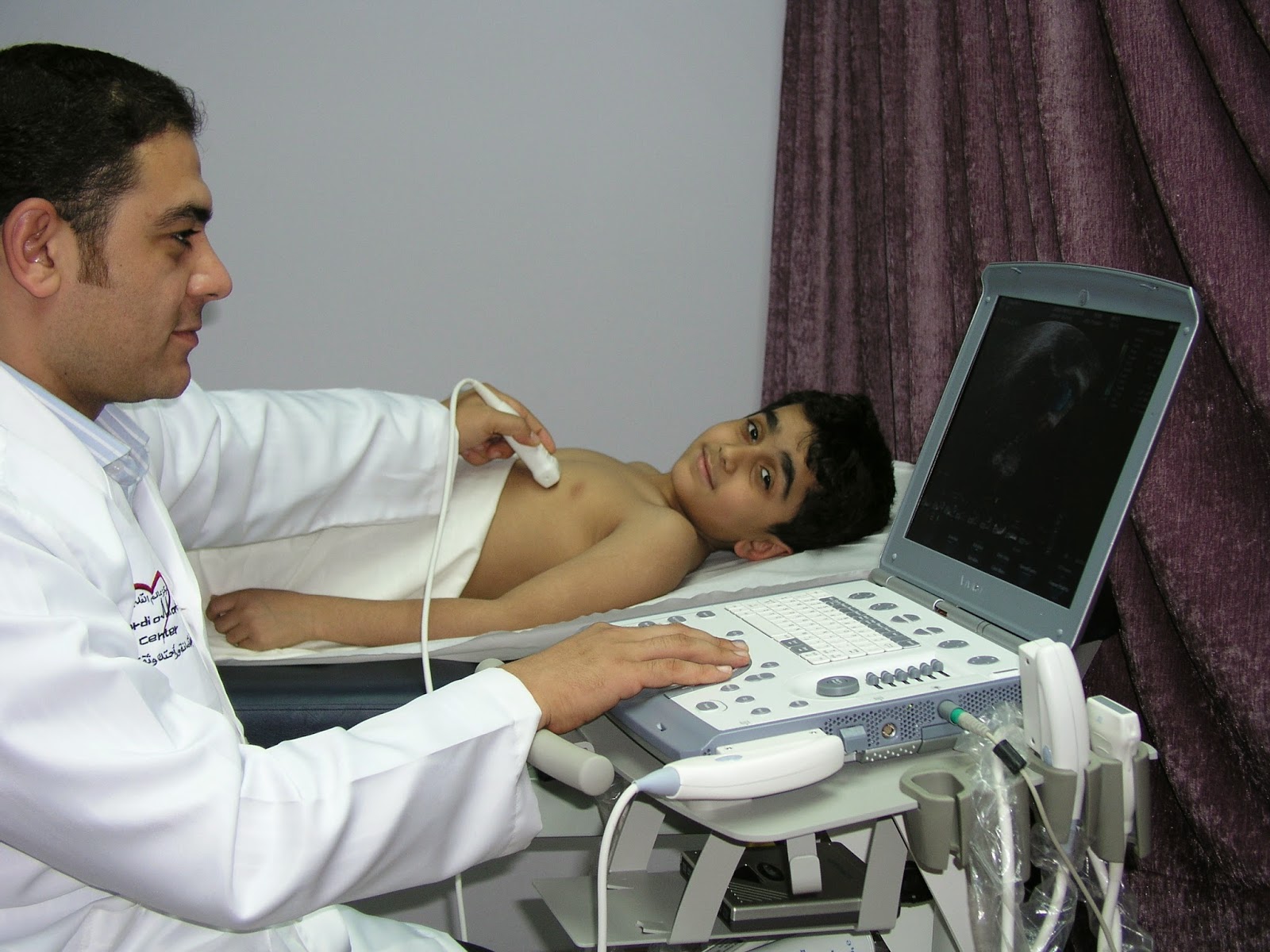
Echocardiogram is a test that used to create the image of the heart by using sound waves. This is used to manage and follow up the patient who have the heart diseases. It also used to evaluate the direction of the blood flow through heart. By using the electrodes which is placed on the heart, the electrical activity is measured.

The different types of echo cardiograms are : 


1.Trans thoracic echo cardiogram : In this this process, places probe, on the chest wall and bounces sound waves off the structures of the heart. The signals are received by the probe and converted to image with the help of a computer.

2.Transesophageal echocardiogram : Here instead of placing the probe on the chest wall, a cardiologist will direct the probe through the mouth into the esophagus. The sound waves can travel to the heart without the interference of the ribs and muscles of the chest wall.

3.Doppler echocardiogram: Using Doppler effect or technology, the echocardiogram can assess the speed and direction of blood flow, that can help to increase the amount and quality of information available from the test. The computer can add color to help the doctor appreciate that information.

4.Stress echocardiogram: The patient may be asked to exercise. The echocardiogram is performed before exercise as a baseline and then immediately afterwards.

echocardiogram

The Echocardiogram is done for :


  • Look for the cause of abnormal heart sounds, unexplained chest pains, shortness of breath, or irregular heartbeats.
  • To check the thickness of the heart wall.
  • To check the heart valves that for to know how well they work.
  • See that how well an artificial heart valve is working.
  • Measure the size and shape of the heart chambers.
  • Check the ability of your heart chambers to pump blood.
  • Detect a disease that affects the heart muscle.
  • To check for blood clots and tumors inside the heart.

Normal results of Echocardiogram


A normal echocardiogram values indicates normal heart measures and chambers and normal wall movement.

Abonormal Results of Echocardiogram


Some problems are very minor and do not make major risks. Other abnormalities are signs of serious heart disease. You will need tests by a experts in such cases.


echocardiography

Risks with Echocardiogram


Usually no risk is associated with echocardiogram. Depend on the material used, there is a risk of having an allergic reaction. Most reactions can be controlled using medicine.
There are no known risks from a Doppler echocardiogram. During a transthoracic echo, the technician may have to press hard on your chest with the transducer. Tell the technician if you feel any pain or discomfort. A stress echocardiogram may cause
  • Dizziness
  • Low blood pressure
  • Shortness of breath
  • Nausea
  • Irregular heartbeats
  • Heart attack.
A transesophageal echocardiogram can sometimes cause:
  • Nausea.
  • Mouth or throat discomfort.
  • Bleeding.
  • Trouble breathing.
  • Slow or abnormal heartbeats.


Child Heart Treatment Center imparts Interventional Pediatric Cardiac Treatment with Latest technologies in Delhi.
Mail Us : drkohlivikas@gmail.com